Some of the most remarkable creatures in our freshwater ecosystems are also among the least known. Hidden in shallow puddles, muddy tractor tracks, and temporary ponds lives an ancient group of crustaceans known as fairy shrimp. These delicate animals swim upside down, grow remarkably quickly, and produce drought-resistant eggs that can survive for years in dry sediment.
One of these species, Branchipus schaefferi, has become exceptionally rare in Belgium. Its remaining known population is confined to a handful of temporary pools in Wallonia, where the habitat is increasingly threatened by agricultural activities, nutrient pollution, and the risk of being filled in or destroyed.
Now, researchers from the Community Ecology Lab at Vrije Universiteit Brussel (VUB), together with local conservation partners, are working to give this extraordinary species a new opportunity to thrive. Their goal is to restore a network of populations in suitable temporary ponds within the species’ historical range in Flanders.
Branchipus schaefferi belongs to the Anostraca, a group of freshwater crustaceans commonly known as fairy shrimp. Unlike many other aquatic animals, fairy shrimp are specialized for life in temporary freshwater habitats that periodically fill with water and dry out completely.
Their survival depends on a remarkable adaptation: the production of drought-resistant resting eggs.
When a temporary pond dries out, the adult animals die, but their eggs remain buried in the sediment. These eggs can survive prolonged periods of drought and hatch when suitable conditions return. Under favourable temperatures, B. schaefferi can reach adulthood in approximately eight days, allowing a new generation to reproduce before the water disappears again.
This rapid life cycle enables fairy shrimp to exploit habitats that are unsuitable for many other aquatic organisms, particularly fish.
Yet their dependence on temporary water bodies also makes them vulnerable. Across agricultural landscapes, the small ponds, depressions, and muddy tracks on which these species depend have frequently been drained, filled in, or altered.
As these habitats disappear, so do the organisms that have evolved to depend on them.
A population on the brink
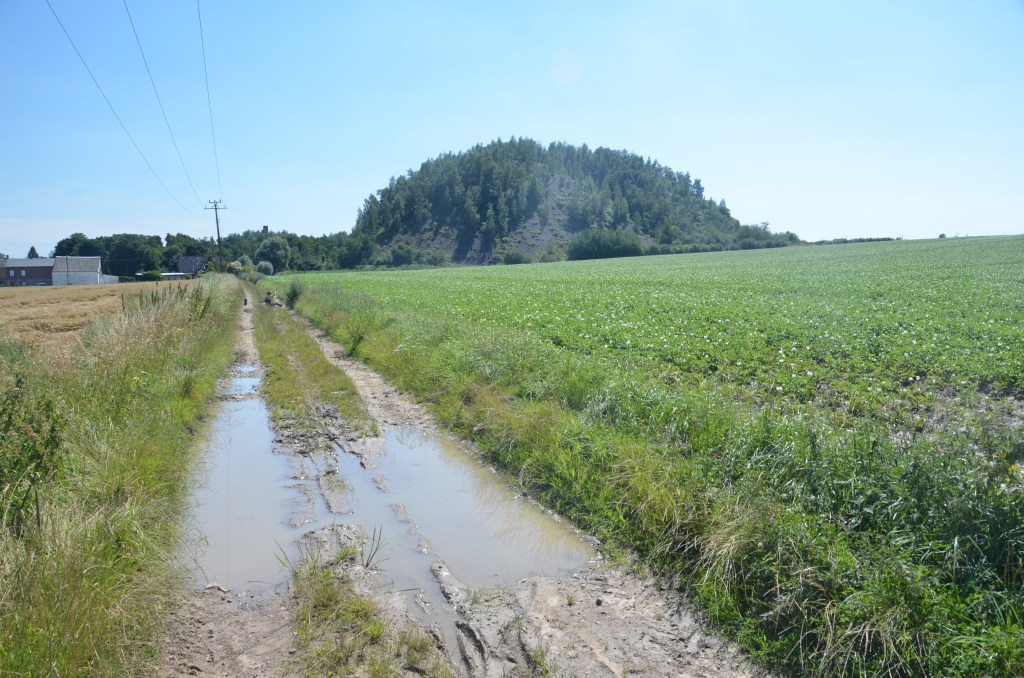
In 2012, researchers rediscovered Branchipus schaefferi in Belgium in a series of water-filled tractor tracks along an unpaved agricultural road in the province of Hainaut.
The discovery was significant. Despite repeated surveys of historical locations, researchers had previously been unable to locate surviving Belgian populations.
However, the rediscovered population occupies an extremely vulnerable habitat.
The shallow pools lie within an intensively managed agricultural landscape. Nutrient runoff from surrounding fields has contributed to deteriorating water quality, while the continued use and maintenance of the road threaten the physical integrity of the habitat.
In 2022, approximately 100 adult fairy shrimp were recorded across seven temporary pools. During subsequent visits in 2024 and 2025, researchers observed only a handful of individuals in the remaining suitable pools.
These observations suggest that the population is undergoing a substantial decline.
The loss of these last remaining habitats could mean the disappearance of the only currently known natural Belgian population of the species.
Protecting the existing habitat remains important, but the location presents considerable practical challenges. The pools are situated on a public agricultural road, and previous efforts to secure effective protection have not resulted in lasting conservation measures.
This raises an important question: can the species be given a better chance of survival by establishing additional populations elsewhere within its historical range?
Rebuilding a lost network of populations
The conservation project aims to re-establish Branchipus schaefferi in suitable temporary freshwater habitats in Flanders.
Historical records confirm that the species occurred in the region, including a documented observation near Brustem in 1930. Its broader historical distribution suggests that Flanders lies within its natural range.
However, suitable habitats have become increasingly fragmented. Even where temporary ponds have been restored or newly created, fairy shrimp may be unable to reach them naturally.
The project therefore proposes an approach known as assisted recolonisation.
Rather than waiting for a species to disperse into restored habitats on its own, researchers actively establish populations in suitable locations within its historical range.
The ultimate objective is not simply to introduce animals into a single pond. It is to rebuild a functional network of local populations, known as a metapopulation.
From the laboratory back into the wild
One of the most important challenges in species restoration is obtaining enough individuals for release without further endangering the remaining natural population.
Fortunately, fairy shrimp have a biological characteristic that makes this possible.
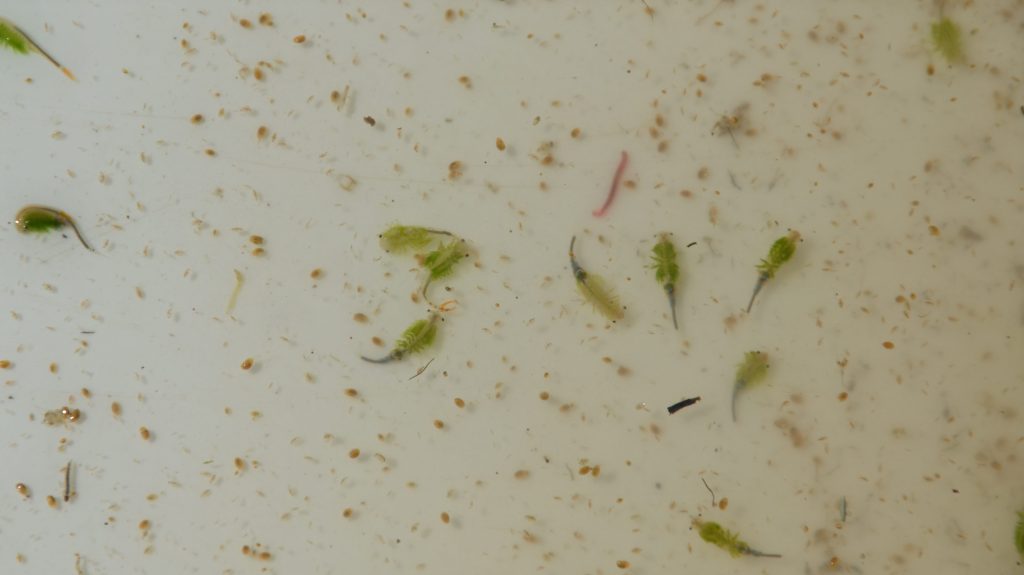
In 2022, researchers collected sediment containing resting eggs from the surviving population near Binche. This material was used to establish a laboratory breeding population at VUB.
Finding the right habitat
The proposed release site is located in Bree-Eik, near Lennik in Flemish Brabant, where local conservation efforts have created and maintained a landscape containing temporary ponds, ditches, and water-filled tracks.
The area is actively managed to promote biodiversity, including the conservation of amphibians.
Five temporary water bodies have been selected as initial release sites, with additional habitats potentially available for future expansion.
The selected habitats are intended to provide the conditions required by Branchipus schaefferi: periodic drying, an absence of fish, open and sunlit surroundings, and suitable water chemistry.
Importantly, the ponds are located close enough to one another to offer the possibility of natural dispersal between them.
How will we know whether the restoration works?
Releasing animals into suitable habitats is only the beginning.
The real challenge is establishing populations that can persist and reproduce without continued human intervention.
The project therefore includes a multi-year monitoring programme designed to assess whether the introduced fairy shrimp survive, reproduce, and establish new generations.
During the first season following release, researchers will monitor the survival and activity of the introduced animals and look for evidence of reproduction.
The next major test will come when the ponds dry out and subsequently refill.
If the released animals successfully produce resting eggs, these eggs should remain in the sediment during the dry period. When suitable conditions return, a new generation of fairy shrimp may hatch.
The appearance of juveniles in the following season would provide evidence of successful recruitment and represent an important step towards establishing a self-sustaining population.
Monitoring will continue over several years to assess whether populations persist across successive wet and dry cycles.
The project will also examine whether the species begins to colonise nearby suitable habitats naturally.
If initial establishment is unsuccessful, the researchers may consider additional releases or modifications to habitat management.
Why does saving a tiny crustacean matter?
The conservation of Branchipus schaefferi is about more than preventing the disappearance of a single rare species.
Fairy shrimp are part of a distinctive freshwater ecosystem that often receives relatively little attention in conservation planning.
Temporary ponds support highly specialized organisms adapted to environmental conditions that many other species cannot tolerate. Their periodic drying and refilling create unique ecological communities, contributing to biodiversity at the landscape scale.
Fairy shrimp can also play important roles in aquatic food webs.
As filter feeders, they consume algae and other microorganisms, potentially influencing the structure and functioning of temporary pond ecosystems.
Recent research has also highlighted the potential importance of large branchiopods as a food resource for a wide range of waterbirds.
Restoring populations of these crustaceans may therefore contribute not only to species conservation but also to the recovery of ecological interactions within temporary freshwater habitats.
However, these broader ecological benefits will need to be evaluated as the restoration project progresses.
Giving a forgotten species a second chance
The proposed restoration of Branchipus schaefferi illustrates an increasingly important challenge in modern conservation: protecting the few remaining populations of threatened species may not always be enough to secure their long-term survival.
In fragmented landscapes, suitable habitats can remain unoccupied because organisms are no longer able to reach them naturally.
By combining ecological research, laboratory breeding, habitat restoration, and carefully planned assisted recolonisation, conservationists can begin to address this problem.
The project in Flanders represents an opportunity to explore whether a species that has disappeared from much of its former range can once again become part of the region’s freshwater biodiversity.
Its success will ultimately be determined not by the number of animals released, but by whether future generations emerge from the sediment, reproduce, and establish populations capable of persisting on their own.
For a creature whose entire active life may unfold within a few weeks, that would be a remarkable achievement.


Leave a Reply